


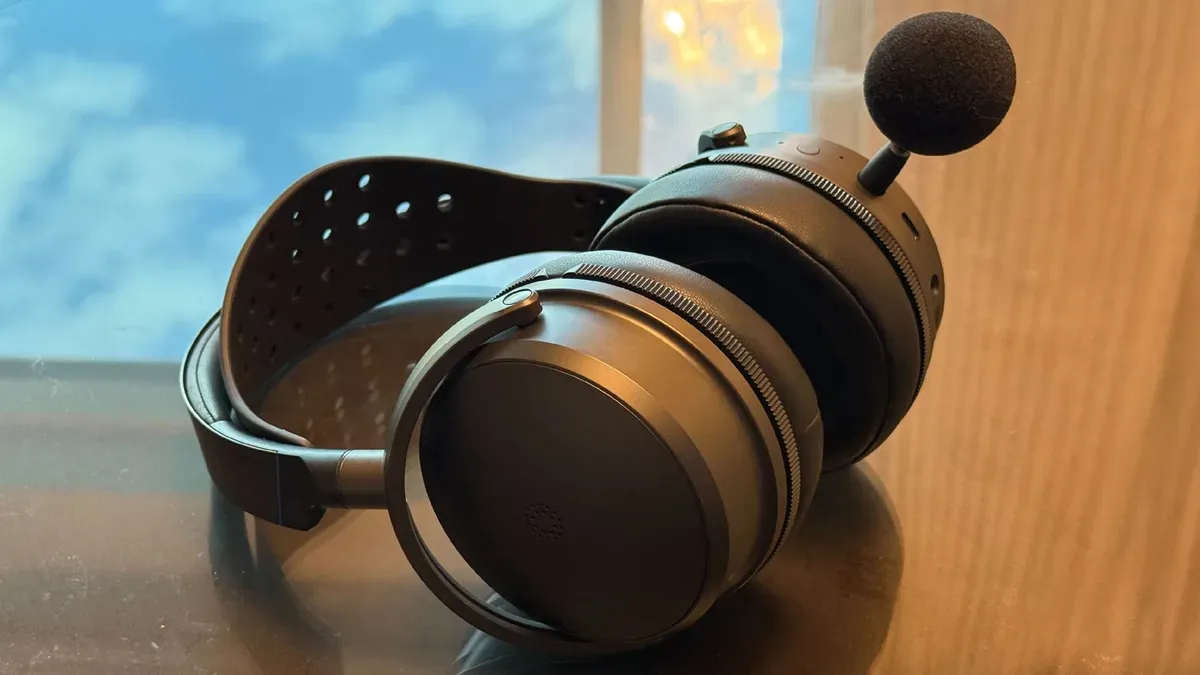
Gaming headsets are getting smarter—and louder. Audeze’s Maxwell 2 throws AI and planar magnetic drivers at your ears, but does it fix the one thing gamers *actually* care about?
The Maxwell 2 introduces SLAM technology, a feature previously seen in the CRBN2 electrostatic headphones, promising 'heightened spatial immersion and precision.'
This implementation aims to enhance audio localization for competitive gaming scenarios, though direct performance comparisons to the CRBN2 remain unverified. Jeffrey Kampman of Tom's Hardware noted the headset’s 'transparent' sound quality but observed that its closed-back design creates a 'stuffy' soundstage—potentially beneficial for isolating directional cues in first-person shooters.
"It’s very transparent to the source material."
The Maxwell 2’s 90mm planar magnetic drivers extend the frequency range to 10-50,000 Hz (versus 20-20,000 Hz in most gaming headsets), but the practical impact of this expansion remains unproven.
The $329-$349 price tag represents a $20 increase over the original Maxwell, raising questions about whether the 'improved' AI mic offers meaningful upgrades over standard noise-canceling solutions. On the show floor, sidetone quality was praised, but in-ear noise-canceling effectiveness was 'difficult to assess.'
Asus ROG Kithara, the direct competitor, offers 100mm planar magnetic drivers and an open-back design at $449. Other flagship rivals remain unnamed, but the Maxwell 2’s 80-hour battery life and multi-platform compatibility (PlayStation, Xbox, PC, Android, iOS, Switch) position it as a versatile option.
At 560g, its ventilated head strap and magnetic side plates aim to balance comfort and durability, though no launch-day swap options were available.