Ancient Fossil’s Upright Walking Traits Push Human Origins Timeline Back 7 Million Years
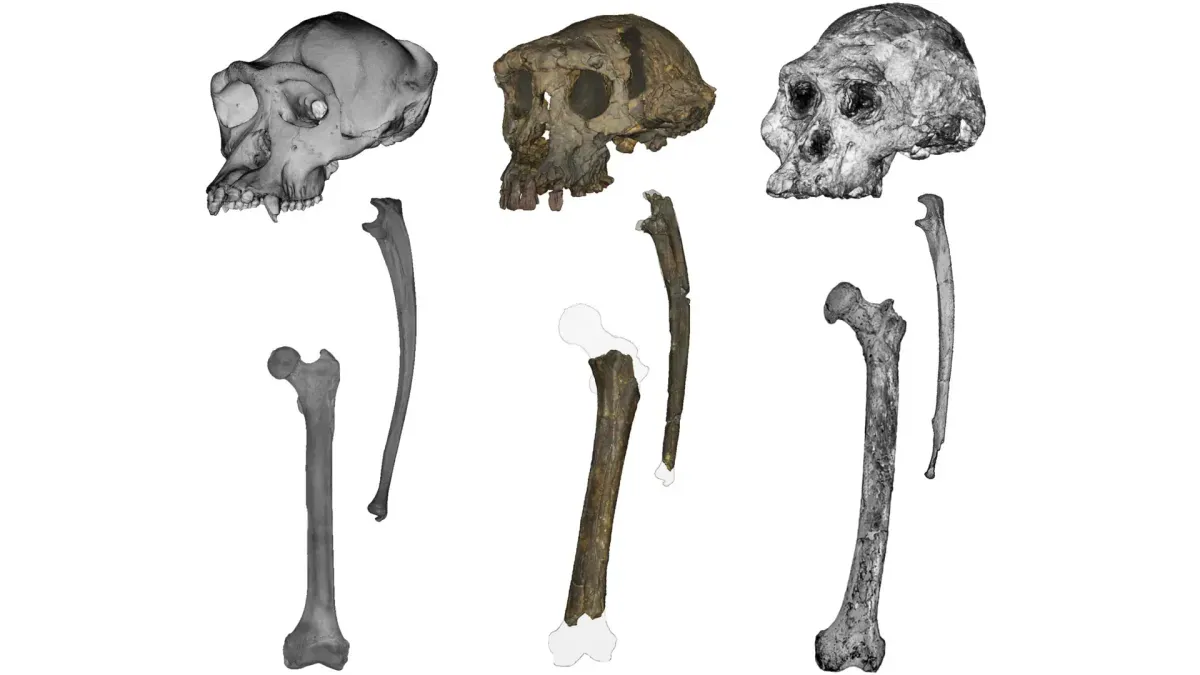
A 7-million-year-old fossil of Sahelanthropus tchadensis has provided new anatomical evidence challenging previous assumptions about the emergence of bipedalism in human ancestors.
The study, published in Science Advances, identifies three key traits—femoral tubercle, femoral antetorsion, and gluteal muscle attachments—that align with hominin bipedal adaptations.
Scott Williams of NYU described the findings as evidence that Sahelanthropus tchadensis "was essentially a bipedal ape... adapted to using bipedal posture and movement on the ground."
The research team employed 3D imaging and geometric morphometrics to compare the fossil’s femur and ulnae with those of Australopithecus and modern primates.
This methodological rigor allowed for precise quantification of limb proportions, which showed a longer femur relative to the ulna—a pattern distinct from apes but consistent with early hominins.
The femoral tubercle, a hominin-specific trait for anchoring the iliofemoral ligament, was a critical focus.
Its presence in Sahelanthropus suggests a functional adaptation for upright walking. However, the study explicitly avoids extrapolating behavioral inferences beyond the anatomical data. The authors attribute the conclusion about "earliest evidence" to direct fossil analysis rather than inferred evolutionary pathways.
Funded by the National Science Foundation (BCS-2041700), the research underscores the need for further comparative studies to contextualize these findings within broader primate locomotion patterns.
While the evidence supports bipedalism in Sahelanthropus, open questions remain about the ecological pressures driving this adaptation and its relationship to later hominin species.