


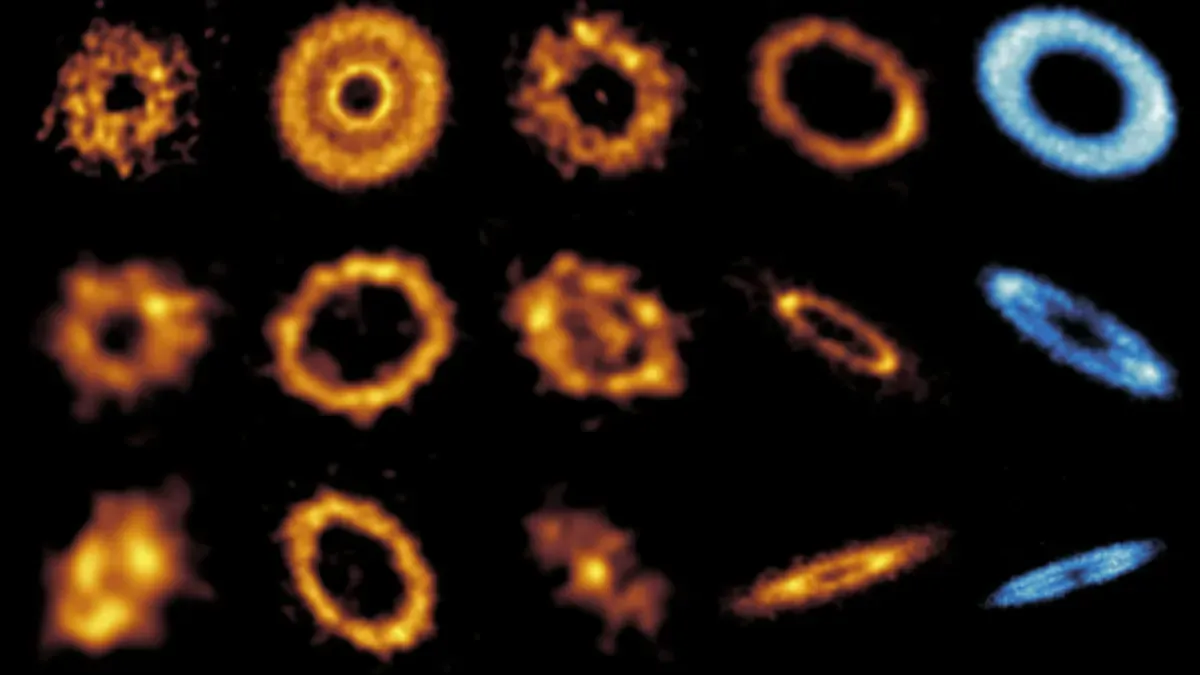
Astronomers have captured the chaotic 'teenage years' of exoplanet systems for the first time, revealing violent collisions shaping young solar systems. Using the Atacama Large Millimeter/submillimeter Array (ALMA), researchers observed 24 debris disks around young stars, uncovering complex structures such as multi-ringed belts, halos, and asymmetries.
These findings provide direct evidence of the collision-dominated phase in planet formation, a process analogous to the Kuiper Belt's evolution in our own solar system.
"We've often seen the 'baby pictures' of planets forming, but until now, the 'teenage years' have been a missing link," said Meredith Hughes of Wesleyan University.
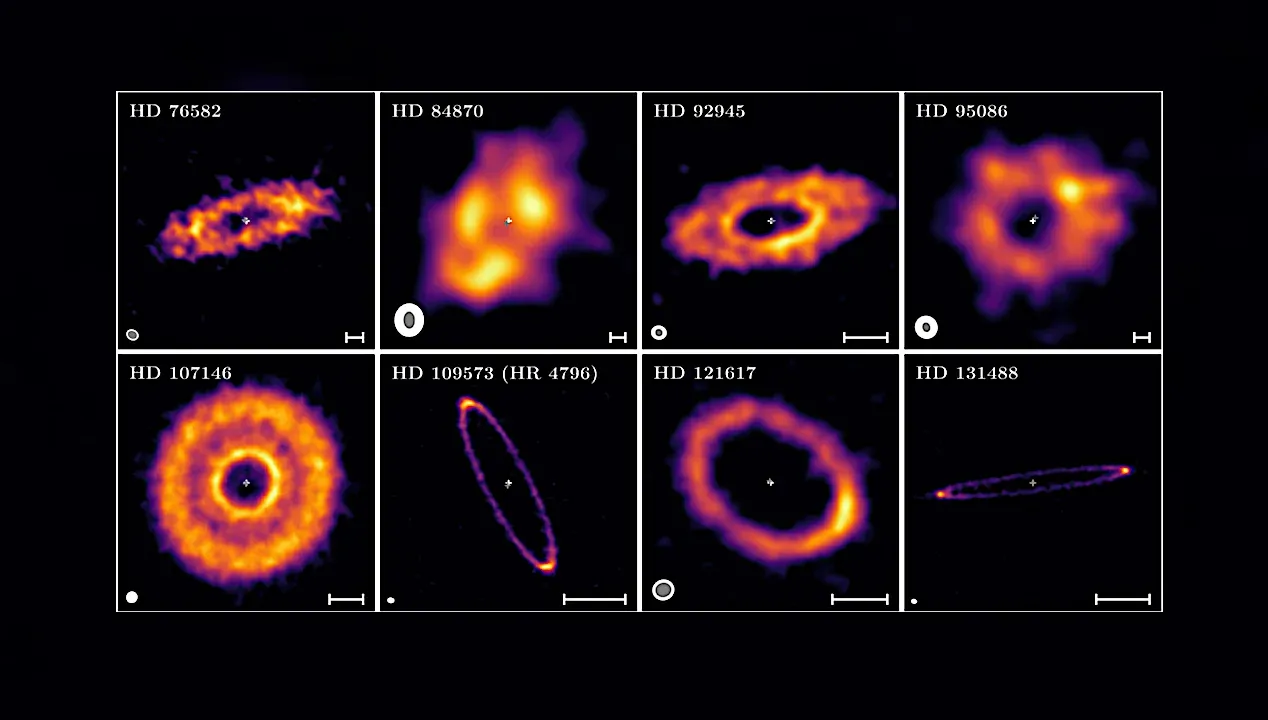
The study, published in Astronomy & Astrophysics on January 20, highlights the diversity of debris discs, which differ from protoplanetary disks by their faintness and dominance of collisional processes over gas-rich accretion. Thomas Henning of the Max Planck Institute for Astronomy noted, "Debris discs represent the collision-dominated phase of the planet formation process."
Sebastián Marino of the University of Exeter emphasized the observational variety: "We're seeing real diversity—not just simple rings, but multi-ringed belts, halos, and strong asymmetries." The team linked these structures to historical events in our solar system, including the moon-forming impact and the Kuiper Belt's dynamic history.
However, the study's authors caution that further observations are needed to determine how these systems evolve into stable configurations like our own.
ALMA's 66 antennas, operating via radio interferometry, enabled the unprecedented resolution required to image these faint, collisional structures.
The findings align with existing models of planetary system evolution but underscore the need for more data on how debris discs transition into mature systems. As Henning added, "Such studies help us understand the processes that shaped our own solar system's architecture."