


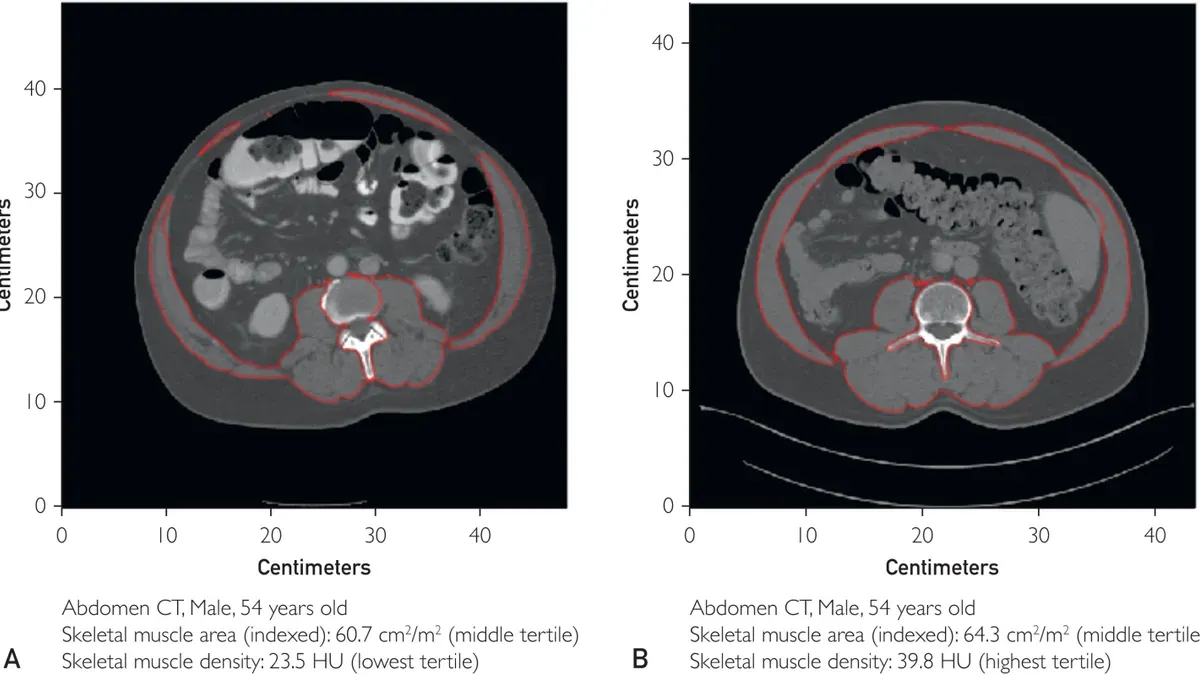
Middle-aged adults with lower abdominal muscle density may face significantly higher fall risks decades later, according to AI analysis of routine CT scans. The study found that muscle density—distinct from muscle size—emerges as a stronger predictor of fall risk in adults aged 45 and older.
Researchers used AI to analyze abdominal CT scans, measuring fat distribution, muscle density, and bone quality. Dr. Jennifer St. Sauver explained: "Muscle density is different; on a CT scan, it's a measure of how 'dark' and homogeneous the muscles are." This distinction highlights why muscle density, rather than sheer muscle size, correlates with long-term fall risk.
The study, published in Mayo Clinic Proceedings: Digital Health (DOI: 10.1016/j.mcpdig.2025.100299), tracked associations between midlife muscle quality and fall risk.
Dr. St. Sauver emphasized: "One of the most important messages from this research is to keep your abdominal muscles in the best shape possible." However, the study establishes correlation, not causation, and does not provide clinical guidance.
⚠️ LEGAL DISCLAIMER: It is for informational purposes only. It never substitutes for professional medical advice, diagnosis, or treatment. Always consult your doctor regarding any questions about your health.