


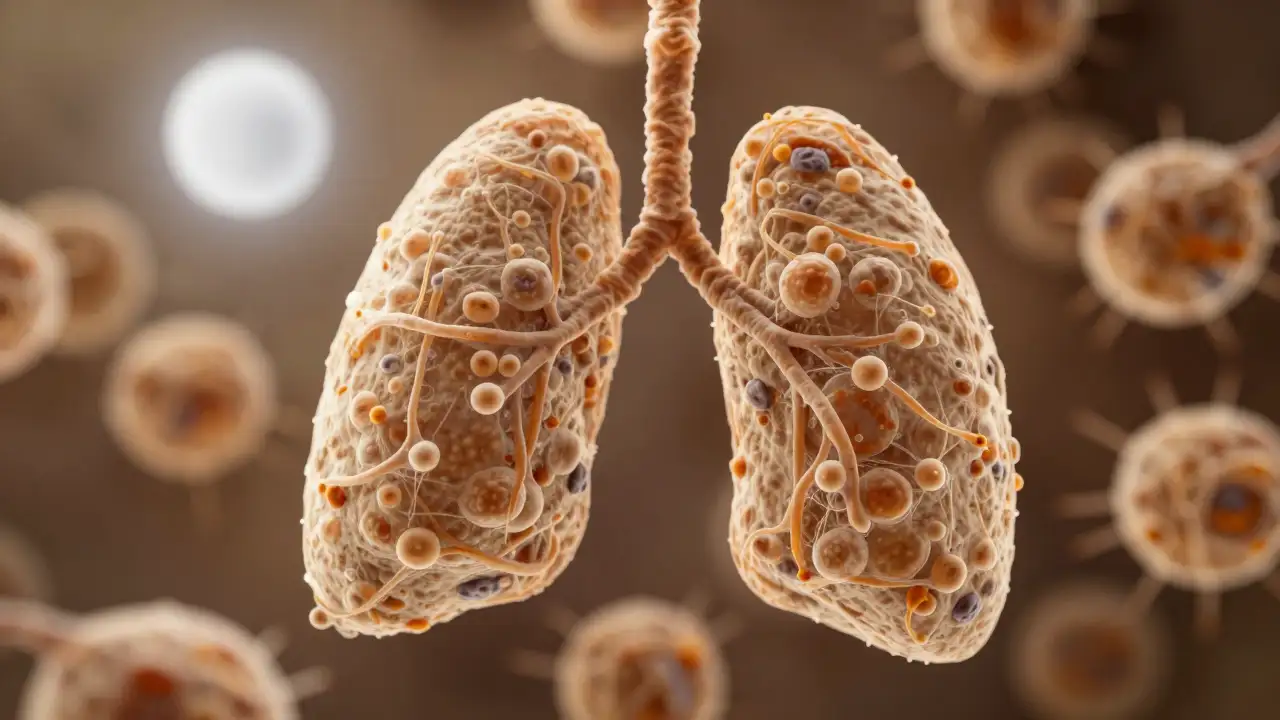
Young mice whose lung cells were forced to express an aging-related stress signal developed severe, COVID-like illness when infected, their lungs flooded with the same destructive immune cell clusters that kill older adults.
The finding, published March 27 in Immunity, reveals that aging lung tissue itself, not just a weakened immune system, may drive the runaway inflammation that makes flu and COVID so dangerous for older patients.
Researchers at UC San Francisco focused on fibroblasts, the structural cells that maintain lung tissue. These cells normally keep airways stable. When the team activated a pathway called NF-κB, typically associated with aging-related diseases, the fibroblasts began signaling macrophages to initiate immune responses. This drew additional immune cells from the bloodstream, including cells marked by the GZMK gene, first identified in severe COVID-19 cases.
These GZMK cells proved ineffective at fighting infection but still damaged lung tissue. The young mice developed symptoms resembling those typically seen in older adults. When researchers genetically removed the GZMK cells, the mice tolerated infection better.
The team then examined lung tissue from older patients hospitalized with COVID-related acute respiratory distress syndrome. These samples contained the same inflammatory cell clusters observed in mice. Patients with more severe illness had more clusters; healthy donor lungs showed none.
Tien Peng, MD, professor of Medicine at UCSF and senior author of the study:
"We were surprised to see lung fibroblasts working hand-in-hand with immune cells to drive inflammaging. It suggests new ways to intervene before patients progress to severe inflammation that can require intubation."
The study leaves open whether targeting GZMK cells or the NF-κB pathway in fibroblasts will translate safely to human treatment, and how early such intervention would need to occur to prevent progression to severe disease.
DOI: 10.1016/j.immuni.2026.02.016