


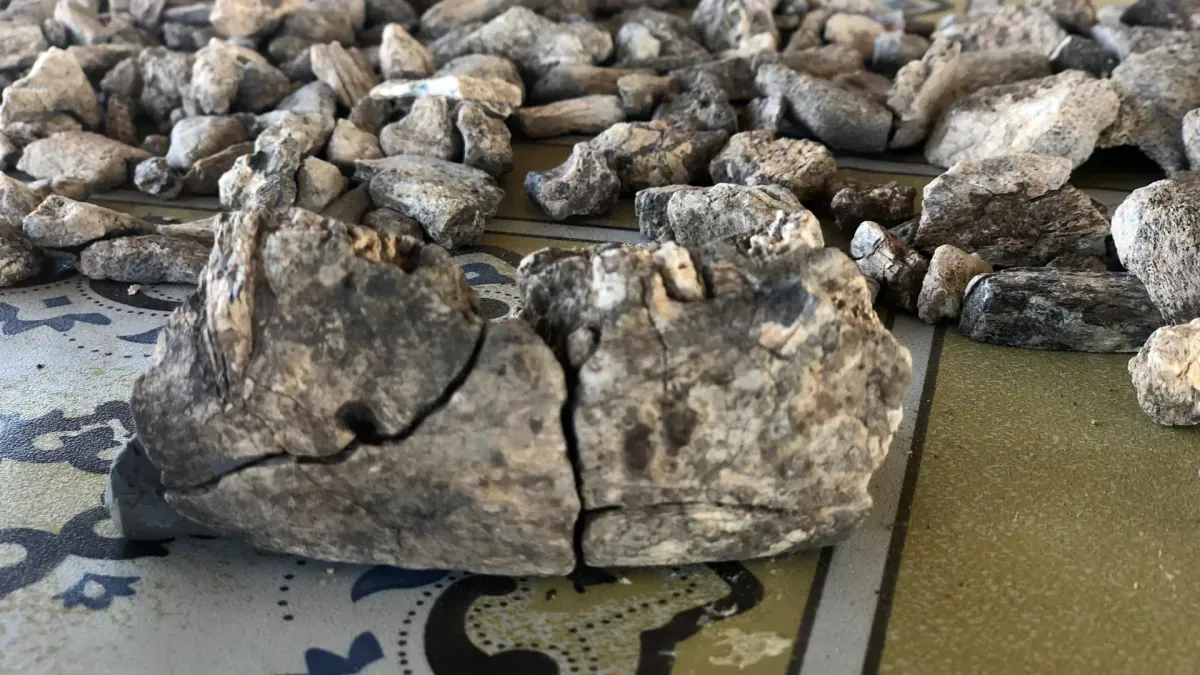
A 2.6-million-year-old jawbone found in Ethiopia’s Afar region forces a reevaluation of Paranthropus’s adaptability and challenges long-held assumptions about its evolutionary role.
The fossil, analyzed using micro-CT scanning and published in Nature (DOI: 10.1038/s41586-025-09826-x), expands the genus’ known geographic range by 1,000 km northward. This discovery contradicts prior hypotheses that Paranthropus was restricted to specific ecological niches due to dietary specialization.
The study, led by University of Chicago researchers with collaboration from Ethiopian institutions, reveals that Paranthropus coexisted with early Homo species in a region previously thought to lack the genus.
Zeresenay Alemseged, a co-author, described the finding as 'so much more than a simple snapshot of Paranthropus’ occurrence: It sheds fresh light on the driving forces behind the evolution of the genus.' The fossil’s location in the Afar region—where 12+ hominin species have been identified but no Paranthropus remains previously found—directly challenges assumptions about its geographic and dietary constraints.
Methodologically, the team employed high-resolution imaging to assess dental and mandibular morphology, suggesting a broader dietary adaptability than previously documented.
However, the authors caution that further analysis of associated faunal remains and sedimentary context is required to confirm these interpretations. The study’s institutional approvals and peer-reviewed publication underscore its methodological rigor, though open questions remain about the genus’ ecological interactions and evolutionary trajectory.