15 U.S. States in Aurora View Zone Tonight as Solar Wind Triggers Geomagnetic Storming
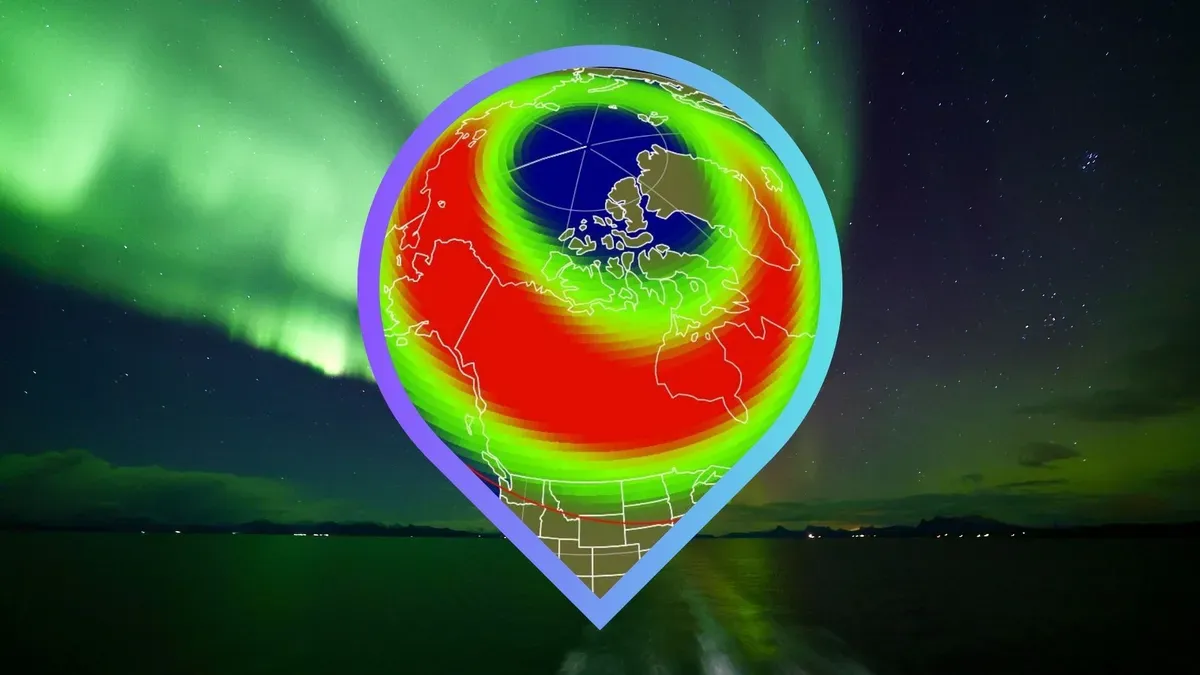
Auroras may extend as far south as New York tonight as a high-speed solar wind stream from a coronal hole on the sun triggers geomagnetic storms over North America.
NOAA's Space Weather Prediction Center (SWPC) has issued forecasts indicating auroral visibility in 15 U.S. states from January 16-18 due to solar wind originating from a coronal hole—a region of the sun's atmosphere with lower density and temperature.
The geomagnetic storming is expected to reach minor (G1) to moderate (G2) levels, with auroras potentially visible as far south as Idaho and New York under G2 conditions. The SWPC statement clarifies: "This current speedy solar wind stream could trigger minor (G1) geomagnetic storm conditions with a chance of isolated moderate (G2) storming."
Optimal viewing times for auroral activity are between 1 a.m. and 7 a.m. EST (0600-1200 GMT), when geomagnetic disturbances are most likely to intensify.
The affected states include Alaska, North Dakota, Minnesota, Montana, Wisconsin, Michigan, South Dakota, Idaho, Maine, Vermont, New Hampshire, Washington, Iowa, Wyoming, and New York. Visibility will depend on atmospheric conditions and local light pollution levels.
Coronal holes are known to release high-speed solar wind streams that interact with Earth's magnetosphere, causing disturbances that manifest as auroras.
The U.K. Met Office has also confirmed the potential for enhanced auroral activity during this period. Forecast accuracy remains time-sensitive, as solar wind intensity and storm classifications can evolve rapidly.